
Why the Hour Before Sleep Matters More in a Hotel Room
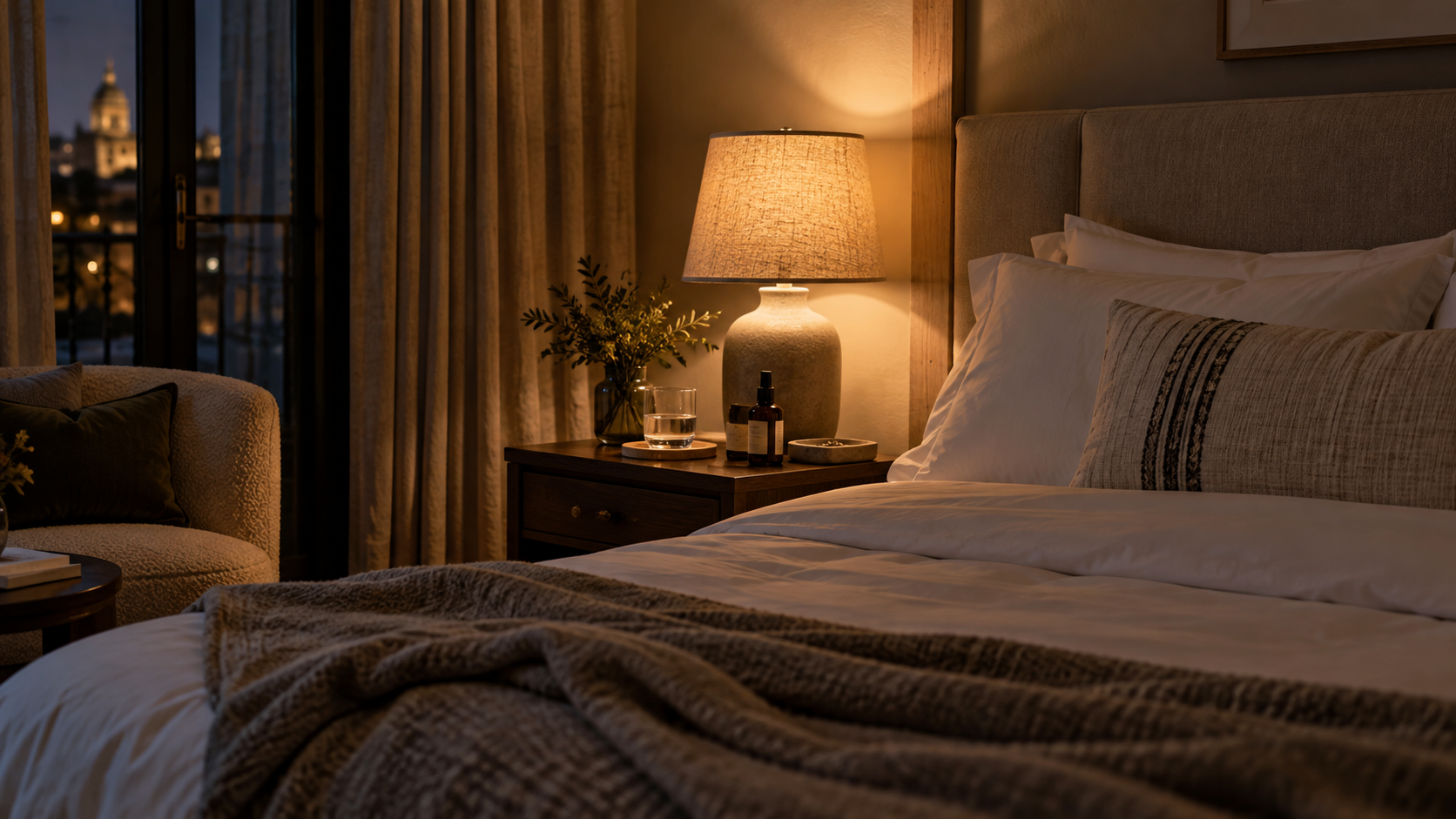
A beautifully designed hotel room can create an immediate sense of comfort.
The bed is inviting, the lighting has been carefully considered, the curtains close out the outside world and the room may contain every physical ingredient we associate with a good night’s sleep.
Yet sleep rarely begins the moment a guest closes the door.
There is usually a period in between arrival and rest when the mind is still processing everything that came before it.
The journey, the conversation over dinner, the emails that were checked one last time, tomorrow’s plans and the unfamiliarity of the room can all remain present long after the suitcase has been put away.
That period before sleep deserves more attention than it often receives.
For hotels, particularly those competing on guest experience rather than simply accommodation, the hour before bed may be one of the most important parts of the entire stay.
The body may have stopped before the mind has
Most of us recognise the experience of feeling physically tired while our thoughts remain busy.
We may be ready for bed, yet mentally still moving through the day.
Travel can intensify this. Even an enjoyable journey involves stimulation: unfamiliar surroundings, navigation, conversations, decisions, noise and changes to our usual routine.
Business travellers may arrive carrying the working day with them, while leisure guests may have spent hours exploring, socialising or travelling before reaching their room.
Checking in creates a physical ending to the journey, but it does not necessarily create a mental one.
This is where the period before sleep becomes important.
Rather than expecting the guest to move instantly from activity into rest, hotels have an opportunity to think about how that transition might be made a little easier.
Unfamiliar surroundings can keep us more alert
Sleeping somewhere new is different from sleeping at home.
At home, countless details are familiar without us consciously noticing them. We know the sounds of the building, the position of the furniture, the feel of the mattress and the usual rhythm of the evening.
A hotel room removes many of those familiar cues.
Even when the room is luxurious, the environment is new. The sounds are different, the light falls differently, the bed feels different and the guest does not yet know what to expect from the surroundings.
This is closely connected with what sleep researchers describe as the First Night Effect, where sleep can be altered during the first night in an unfamiliar environment.
However, the interesting opportunity for hospitality begins before the guest has even gone to sleep.
If unfamiliarity can influence how settled we feel, then the moments leading up to bedtime become an opportunity to introduce cues that encourage the mind to move towards rest.
The value of a wind-down period
At home, many people already have routines that signal that the day is ending, even if they have never consciously thought of them as wellness practices.
They might make a warm drink, dim the lights, take a shower, read for twenty minutes or listen to familiar music.
These small habits create a bridge between daytime activity and sleep.
A hotel stay can interrupt that bridge.
The guest’s normal routines may not be available, particularly during a short stay.
Their belongings are still in a suitcase, their surroundings are unfamiliar and their usual evening rhythm has been replaced by something new.
Hotels therefore have an interesting opportunity to create a gentle alternative.
Not an elaborate sleep programme.
Not another list of things the guest is expected to do.
Simply an environment that makes slowing down feel natural.
Small sensory cues can change the atmosphere
Our senses play an important role in how we experience a space.
Lighting can change the mood of a room almost instantly. Sound can either keep us alert or soften the atmosphere.
Scent can become associated with a particular place or feeling, while touch can turn an ordinary routine into something more comforting.
Individually, these details may appear insignificant.
Together, they can help create a clear change of pace.
A guest who dims the lights, puts down their phone, uses a familiar or calming fragrance and listens to something gentle is creating a very different experience from someone answering emails under bright lighting until the moment they climb into bed.
The goal is not to manufacture relaxation.
It is simply to make space for it.
That distinction matters.
Wellness should not become another task the guest feels required to complete. The most effective rituals are often the ones that feel effortless and optional.
The hotel room can become part of the transition
Hotels have traditionally concentrated much of their attention on the bed itself.
Mattress quality, pillows, linen, temperature and blackout curtains all matter enormously, and they should.
But perhaps the conversation around hotel sleep needs to begin a little earlier.
What happens during the forty-five minutes before the guest gets into that bed?
Does the room encourage them to slow down, or is it simply somewhere to continue the day?
Does the guest have a reason to put their phone aside?
Is there a small ritual available that feels different from the pace of everything that came before it?
These questions take the hotel experience beyond physical comfort and into something more emotional.
They ask not simply whether the room is designed for sleep, but whether the guest is being helped to arrive at sleep in the first place.
A calmer first night can become part of the memory of a stay
The first evening in a hotel carries disproportionate weight.
It is the moment when expectations meet reality.
A guest notices the room, the lighting, the scent, the view and the details that have been chosen for them. It is also the point when they begin deciding, often subconsciously, how the stay feels.
That means the period before sleep is not merely functional.
It can become part of the memory of the hotel.
A thoughtful evening ritual may be remembered long after the precise thread count of the bed linen has been forgotten.
That is particularly relevant for boutique and luxury hotels, where differentiation is increasingly found in the details that make an experience feel personal.
Where Soothr fits
Soothr was created around this transition between arrival and relaxation.
The Sensory Kit brings together carefully selected products and digital experiences designed to give guests an opportunity to slow the pace of the evening through scent, touch and sound.
A guest may choose to use the pillow spray, apply the aromatherapy roller or magnesium body butter, listen to a calming soundscape or simply spend a few quieter minutes away from their phone.
There is no prescribed routine and no promise of perfect sleep.
The intention is much simpler: to create a moment when the guest can begin leaving the day behind.
For hotels, that adds another layer to the guest experience.
The room can already be beautiful, comfortable and thoughtfully designed. Soothr simply asks whether the experience might also help the person inside it mentally settle into their surroundings.
Perhaps the sleep experience begins before bedtime
When hotels think about sleep, the conversation naturally turns towards beds, pillows and room design.
But sleep does not begin at the mattress.
It begins with the gradual transition away from stimulation, activity and attention.
That is why the hour before sleep matters.
For a guest in unfamiliar surroundings, those quiet moments can help mark the end of the journey and the beginning of the stay itself.
And perhaps that is the real opportunity for hospitality.
Not simply creating a room where someone can sleep, but creating an experience that helps them feel ready to do so.
