
Sleep is becoming part of the reason people travel
For years, hotels have competed through beautiful rooms, exceptional service, memorable dining and increasingly sophisticated spa experiences.
But a new priority is emerging in hospitality: sleep.
Travelers are becoming more conscious of the importance of rest, and some are now choosing accommodation specifically because of the sleep and wellbeing experiences it offers.
This growing interest is often described as sleep tourism.
It reflects a wider shift in how people think about travel.
A hotel stay is no longer necessarily about escaping everyday life to do more. For some guests, it is about stepping away from the demands of everyday life and having the opportunity to properly recharge.
The Global Wellness Institute identified sleep tourism as a significant trend in its 2026 Sleep Initiative report, highlighting how hotels and wellness resorts are developing experiences specifically focused on rest.
For luxury accommodation providers, this presents an interesting opportunity.
What does sleep tourism actually look like?
Sleep tourism can take many forms.
At one end of the market are specialist retreats and hotels offering dedicated sleep programmes.
These may include consultations with sleep specialists, carefully designed lighting, personalised sleep environments, relaxation treatments and technology intended to support healthier sleep patterns.
Other properties are taking a more accessible approach.
Thoughtful bedding choices, pillow menus, calming room environments, evening refreshments and sleep-focused amenities can all contribute to a guest experience that places greater emphasis on rest.
The important point is that sleep tourism does not have to mean turning a hotel into a specialist sleep clinic.
It can begin with a much simpler question:
What could we do to make our guests' experience of rest feel more considered?
The opportunity for boutique and luxury hotels
Large investment in specialist sleep technology or dedicated wellness facilities will not be practical for every property.
However, that does not mean smaller luxury and boutique hotels are excluded from this growing area of guest experience.
In fact, their ability to create personal, thoughtful experiences may be one of their greatest advantages.
Guests choosing independent and boutique accommodation often value the details that make a stay feel different.
A carefully prepared bedroom, a thoughtful welcome and an experience that feels personal rather than standardised can all contribute to that impression.
Sleep offers another opportunity to demonstrate that attention to detail.
Rather than concentrating exclusively on the physical bedroom, hotels can consider the wider experience surrounding it: how guests arrive, how they unwind after a busy day and what helps them feel comfortable in unfamiliar surroundings.
Looking beyond the mattress
When hotels consider improving sleep, the natural starting point is usually the bed.
Mattresses, pillows, bedding, temperature and noise are all important elements of the sleep environment.
But the guest experience does not begin when someone gets into bed.
The transition from an active day to a quieter evening is another part of the picture.
A guest may have travelled several hours, attended meetings, explored a new destination or spent the evening socialising. By the time they return to their room, they may be physically tired but still mentally occupied.
This creates an opportunity for hotels to think beyond the traditional sleep amenities.
Could the room offer a more considered wind-down experience? Could guests be given the freedom to explore calming sounds, gentle sensory experiences or simple relaxation rituals?
These are relatively small additions to the overall guest journey, but they can help make the bedroom feel like more than simply somewhere to spend the night.
Bringing wellbeing into the guest room
Wellness is often associated with the hotel spa, fitness facilities and treatments.
These remain important, but the growing interest in sleep creates an opportunity to bring wellbeing into the private space of the guest bedroom.
This does not need to involve an elaborate programme or a prescribed routine.
Some guests may appreciate calming audio. Others may enjoy a familiar scent, a little time away from their phone or a simple moment of quiet before bed.
The experience should be flexible and personal, recognising that guests have different preferences and that no single approach will suit everyone.
For hotels, this is an opportunity to extend their wellbeing offering beyond the facilities guests might traditionally expect.
It also creates another way to demonstrate care for the person staying in the room, rather than focusing solely on the room itself.
Where SOOTHR fits into the changing sleep experience
At SOOTHR, we believe the hotel sleep experience deserves attention beyond the bed itself.
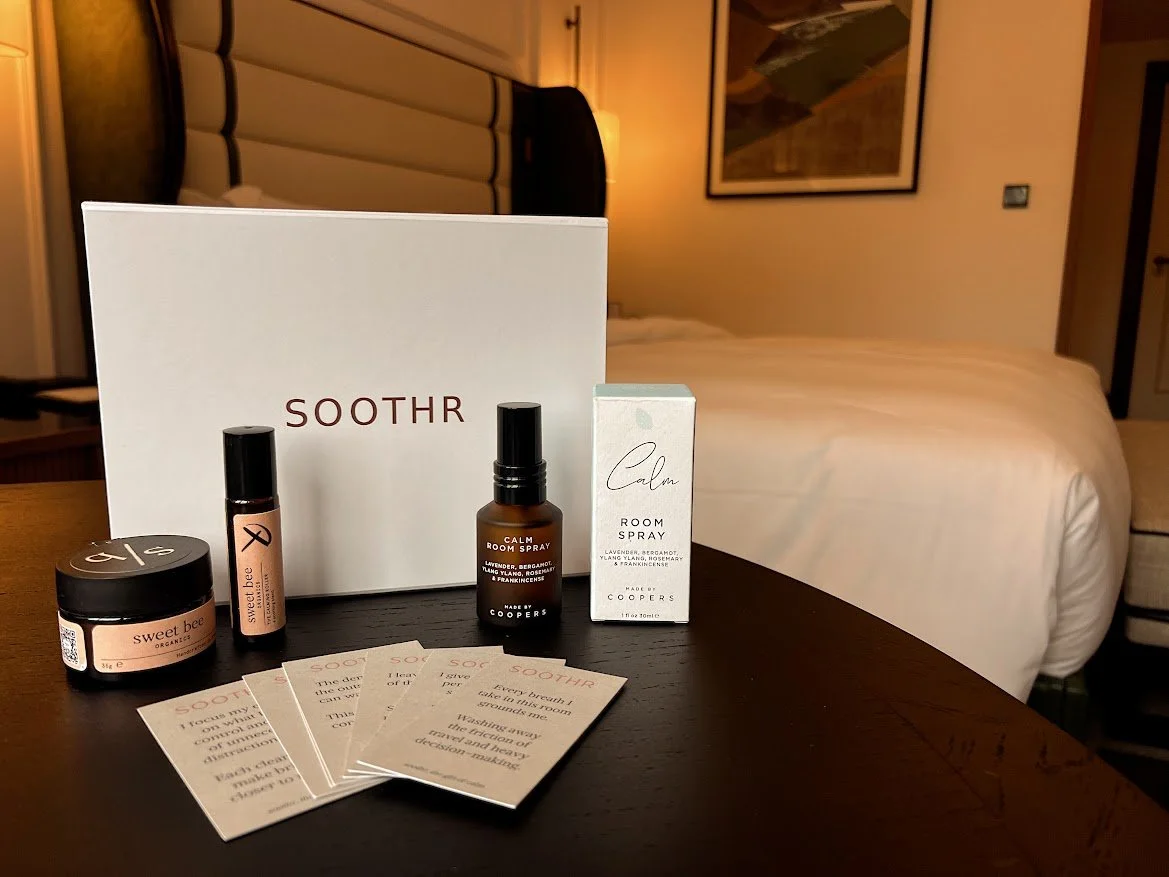
Our sensory wellbeing kits bring together carefully selected physical products and a digital experience designed to give guests an opportunity to pause, unwind and create their own evening ritual.
Combining scent, touch, affirmation cards and calming digital content, SOOTHR offers guests a simple way to explore moments of calm in the privacy of their room.
There is no prescribed routine and no promise of a perfect night's sleep. Guests can choose the elements that appeal to them and enjoy the experience at their own pace.
For hotels, it provides another way to bring wellbeing into the bedroom and make the guest experience feel more thoughtful.
A new way to think about the hotel bedroom
Sleep tourism may be developing through specialist retreats, advanced technology and dedicated wellness programmes, but its wider message is relevant to accommodation providers of every size.
Guests are increasingly interested in how travel makes them feel, not simply where they stay.
For luxury and boutique hotels, that creates an opportunity to think differently about the role of the bedroom.
A beautiful room and a comfortable bed will always matter. But perhaps the next step is to consider what happens around them: the small details that help a guest slow down, feel at ease and make the most of their time away.
Because a truly restorative stay should offer more than somewhere comfortable to sleep.
It should give guests the opportunity to feel well.
SOOTHR – The gift of calm.
Discover how SOOTHR brings sensory wellbeing into the hotel guest experience at soothr.co.uk.
